
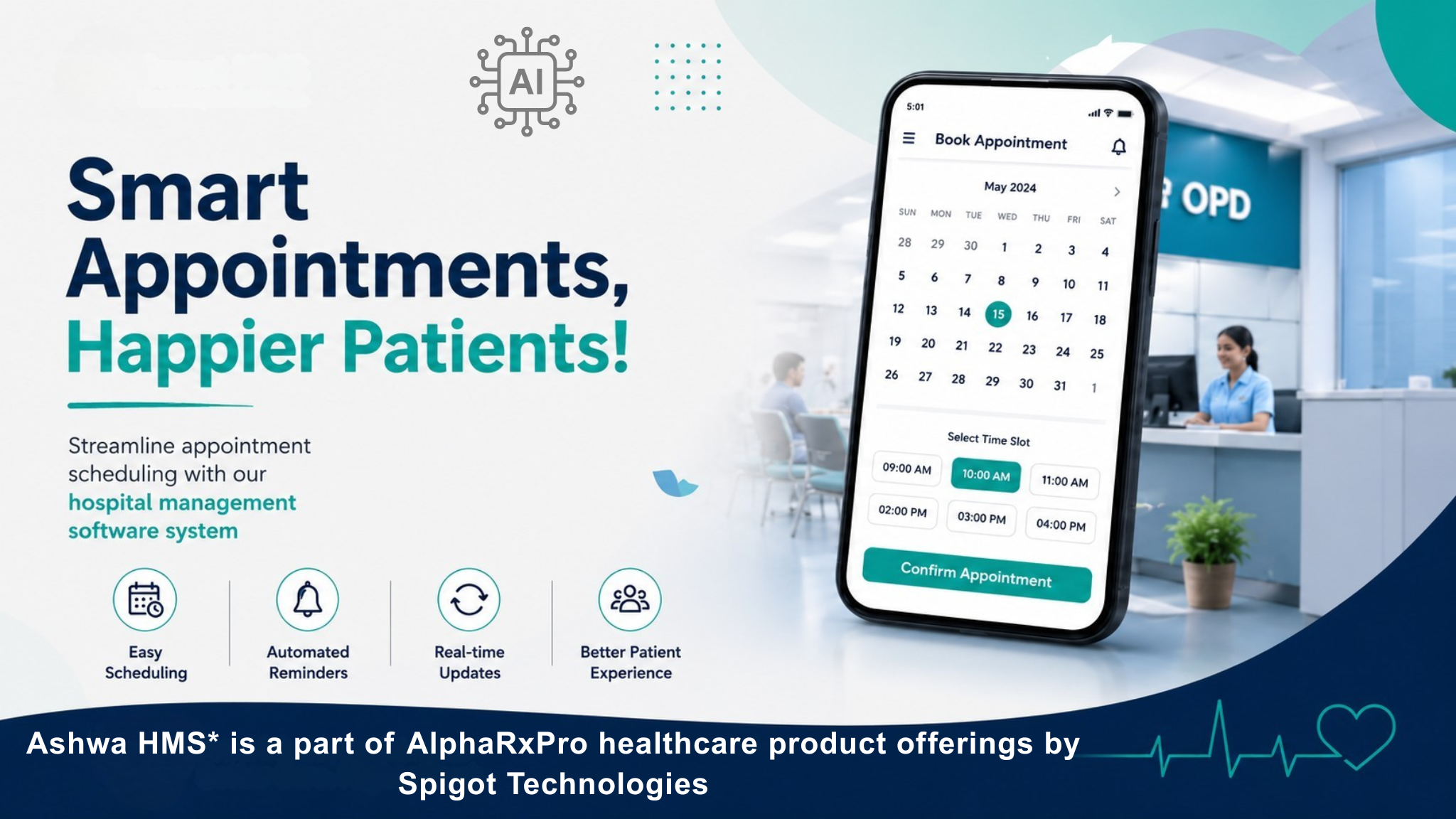
Hospitals are the major lifelines of the society encompassing a connected chain of institutions that discharge duties based on the requirements or situation. People undeniably receive the requisite medical support and guidance from hospitals, nursing homes, pharmacies, clinics and diagnostic centres. There is undoubtedly a huge influx of patients in hospitals and nursing homes today that could become an uphill task for the staff to handle.
How Long OPD Queues Affect Patient Experience?
While there are patients who are lining up for many reasons in a hospital, say they have come for an OPD consultation or to get admitted in the hospital or just to collect the bill, it has been invariably seen that the Outpatient Department (OPD) is the most unwieldy among all the departments in the hospital. However, a hospital management application can streamline OPD operations and improve the experience of patients.
The Growing Challenge of OPD Queues in India
This is particularly the case in countries like India, where hospitals are plagued by long waiting times and as a consequence long OPD queues are an accepted part of receiving the much required medical attention. However, things are changing. With technology booming and the increased use of smartphones, there is a growing awareness among patients and their family members, regarding alternative solutions during these situations. It is seen that hospitals facing such problems usually lose potential patients to other hospitals or one of the competitor hospitals in most cases.
Why Efficient OPD Management Matters?
Let us first understand the importance of the OPD department. Being the primary reception point in any hospital, it can have a lasting impact on the minds of patients. I am talking about what we prominently refer to as patient experience or patient trust. In fact, OPDs serve as a conduit between the hospital and the community.
While timely interventions are absolutely the need of the hour for avoiding unnecessary delays or any kind of emotional discomfort, it is certainly not possible to achieve the coveted level of success. The use of an HMS software can truly be a turning point for the stakeholders and staff in the hospitals, as it helps you streamline your OPD by taking into account the efficiency and throughput.
Things cannot be brought into complete control, despite having a strong understanding of the repercussions. This is because of several unforeseen and unprecedented situations, and we can typically describe this as a practical disconnect between the supply and demand. For instance, if there are multiple appointment bookings in your hospital and there is a sudden inflow of patients who have walked in directly without any scheduled appointment. The situation creates trouble and chaos.
Not handling such scenarios well can have serious financial implications, as it can adversely impact the revenue. With word of mouth being considered the yardstick of evaluating people or institutions, people may rethink about visiting your hospital after having had a negative experience. The HMS software offers amazing benefits that can help you to mitigate the risks and prevent any irreversible damage due to poor crowd management at the OPD department.
While data is available with the hospitals, it is only the hospital information system that can provide a clear overview of the workflow. You get an edge when you accurately determine how many patients are currently in OPD either for registration or consultation or purely for a billing purpose. The seamlessness with which data is reflected across various modules in the software can empower hospitals to handle complex implications of the long OPD queues. The schedule of the doctors is also clearly known to the operator. With clear ownership at every step there is tremendous transparency established in the process, and any issue can be addressed or attended to very easily.
MIS or real time reports can help your focus on what should be prioritised especially with insightful updates from historical data. You get to understand the trends by knowing when there would be a huge inflow of patients in the OPD, or drop in OPD traffic.
Even during patient revisits the software eliminates the need to register the patient again by displaying the registration information of the patient captured at the very first visit.
While your problems are minimised with the support of the software. You can still adopt the following best practices.
How a Patient Queue Management System Reduces Waiting Time?
In addition to the HMS, it is recommended to make use of a patient queue management system that displays the names of the patients very clearly on the television screens, so that there is clarity about who must go first or who has to go next. Even alerts from WhatsApp or SMS can be used to intimate them, when their turn is close. Patients can be made to wait in rooms that are not crowded as that reduces anxiety and can make the experience less negative.
You can also flag the no shows if the patients do not show up at the stipulated time. Probably after calling thrice, it can be done so that other patients can be attended to immediately without any further delay. Furthermore, it is recommended to have some buffer time for the scheduled appointments. You can use this buffer time to make up when the consultation takes longer than expected. When everything is as planned, you can use the time to attend to a walk in patient. The digital queue system must be handled dedicatedly by a single person during the peak hours.
Streamline Your OPD Queues With Ashwa Dazzle!
Ashwa Dazzle is a hospital management software offered by Spigot Technologies, and a part of AlphaRxPro’s healthcare product offerings. If you are searching for a hospital management system web application that can simplify every aspect of your workflow, then you are in the right place. Contact us today to enhance the operational effectiveness of your hospital, nursing home, clinic or pharmacy.
With the advent of AI, we also offer an AI enables hospital management system that can reduce your administrative burden by handling repetitive and important tasks such as appointment scheduling, rescheduling and cancelling making life even more easier for the staff of the hospital.