
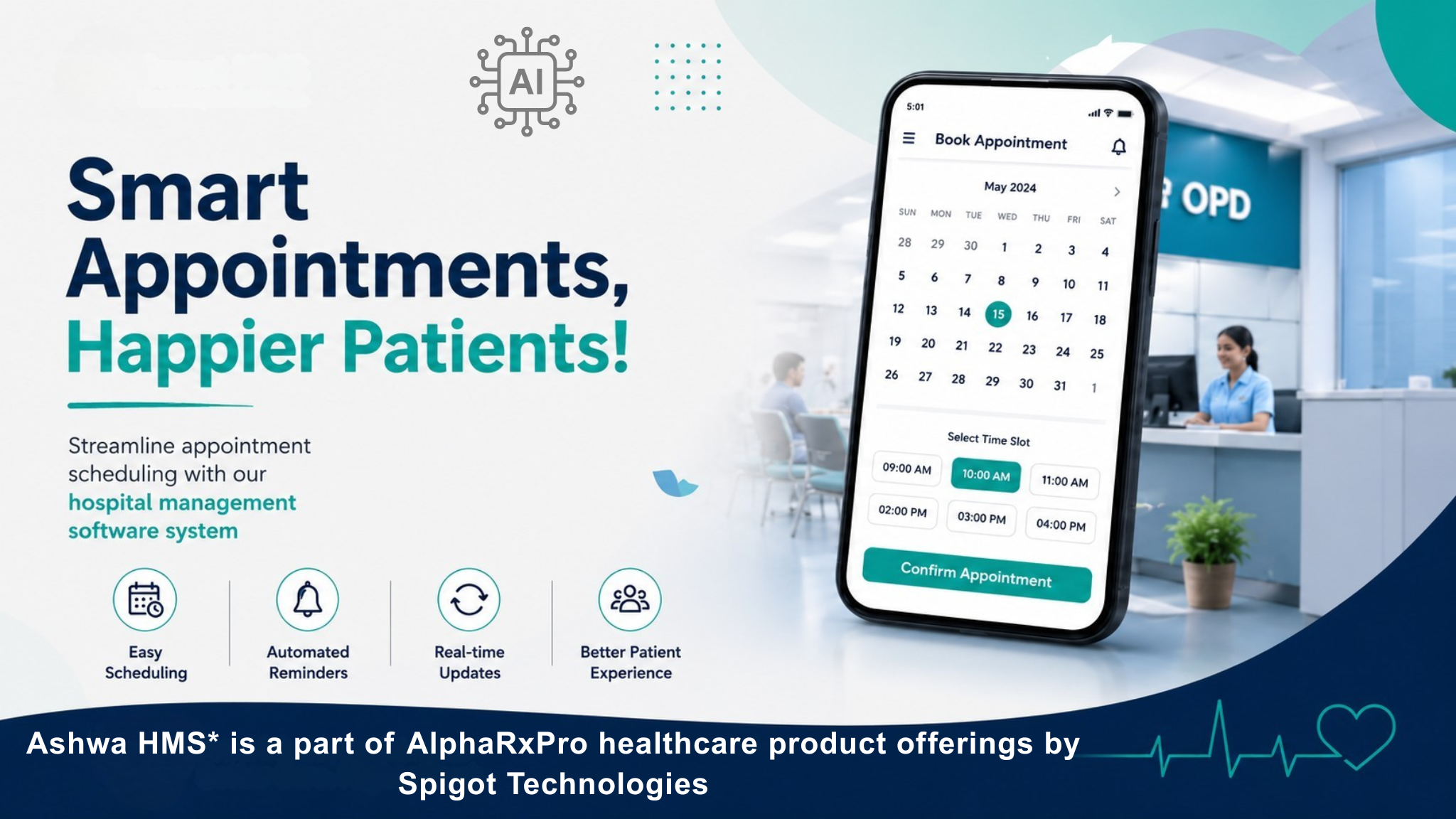
In today’s scenario, it is an absolute necessity that hospitals today operate in an efficient manner for the safety of patients. In fact, this has a profound impact on the staff, the patients, and also the society as a whole. When the staff is less perturbed by the streamlined and seamless processes, it paves the way for improved patient health, and a surge in the revenue of the institution. Deploying an HMS software for hospitals can be a true turning point as tasks are very well executed by staff with responsibilities devolved at various levels.
While there are several issues and disputes that get highlighted, bed occupancy is an underrated problem that can jeopardize the entire ecosystem. It is imperative to understand that bed occupancy is a core operational activity that can hinder the proper functioning of hospitals or day care centres, if not handled in a proper and effective manner. In addition to all these, the adjusted staff schedules, expedited patient discharges and diverted emergency department arrivals can wreak havoc in hospitals.
Situations can get calamitous landing the entire hospital staff in a quandary, with no quick or clear solution. Let us assume that bed occupancy becomes full, then surgical procedures could face cancellations, and the staff could face the brunt with intense burnout. It brings multidimensional problems adversely affecting patients, nurses, physicians and administrators. Overcrowding is another common repercussion, when there are no beds available. The situation could get worse with hospitals having to accommodate patients in the halls. Even emergency rooms have to be used and there is a limitation placed on the treatment of critically ill patients.
How HMS Software for Hospitals Improves Bed Management?
A Hospital Management System is an elixir to this problem. With hospitals and day care centres not having the much sought after visibility or control, an HMS software can help you deal with these structural or capacity bottlenecks.
The software provides the user or the administrator with valuable information on the real time status of all the available beds, and the beds that are presently in use. It empowers the staff by saving them the time which gets consumed in counting and manually recording the availability of beds. With the software serving as a centralised platform, there are literally no issues that arise due to poor communication between the different departments in the hospital.
The software helps deliver real conceivable benefits to hospitals. It eliminates the risk for overbooking as well. Furthermore, the administrative overhead is reduced and errors that were turned catastrophic during the manual processes are mitigated.
How HMS Software Helps Manage Bed Allocation?
Basically, a hospital management software helps facilitate communication between different departments of a hospital to ensure proper bed allocation. So, patients do not have wait too long for treatments as the free beds are quickly identified and allocated to them without loss of time.
Activities pertaining to different departments, are consolidated in one particular module to manage the process of bed management. The software also prevents bed allocation mismatch, where beds unrelated to the patient’s condition are assigned to them and this leads to undesirable outcomes especially during prolonged stays.
How Better Bed Management Reduces Emergency Bay Waiting?
The most undesirable consequence of not allocating bed properly is the patients getting stuck in emergency bays. This can cause a negative impact on the hospital, with patients relating to this negative experience after leaving. Patient do not evince trust in the services of the hospital any further. The treatment is blocked for new arrivals as well, in such scenarios.
The patient throughput is negatively impact in the very process. Proper care must be exercised so that beds are nether underutilised or overutilized in hospitals. Both are detrimental for hospitals. Underutilisation can cause financial loss to the hospital, whereas overutilisation can create chaos with lot of congestion and increase in the risk of infections.
The HMS software undoubtedly creates a framework for modernising and handling bed management but does require an initial investment and continuous refinement to keep things going in a seamless manner.
How HMS Reduces Patient Waiting Time?
One of the most oft expressed concern is the waiting time. Patients who are already tensed or uncomfortable due to an ailment or painful situation feel really upset, when they cannot move into a ward at the earliest. With the software providing crystal clear transparency it is no longer the case, thereby paving the way for increased satisfaction among both patients and healthcare providers.
Using Patient Acuity Levels for Better Bed Allocation
The staff can do a scrutiny on the acuity level that let’s them evaluate and understand the seriousness of an illness and extent to which nursing support has to be provided. They can allocate the most suitable bed with a reasonable schedule for cleaning.
Improving Bed Occupancy with HMS Software
The software helps administrators, doctors and other medical staff understand the concept of bed occupancy in an intricate manner, for serving the patients better, and improving patient satisfaction.
It gives an opportunity to understand the bed utilisation rate, which is about the percentage of beds that are occupied by patients in a specific time frame. In addition to this, you get to know the bed turnover times that is the number of hours beds lie vacant especially in the phase after a patient has left and before the next patient is yet to arrive.
Steps for improvement can be taken based on these aforementioned factors.
As patients today are not easily satisfied with mediocre or run of the mill services, it is important for hospitals to understand this and provide services that can leave a positive impression on the minds of patients. With the backing of an HMS software, you are very close to succeeding and winning the trust of your patients. The software eliminates the need for overloading the managers or staff with insignificant monitoring tasks while decreasing care coordination issues.
Ashwa Dazzle is a hospital information system offered by Spigot Technologies, and a part of AlphaRxPro’s healthcare product offerings that can streamline every aspect of your workflow. Contact us today to improve the operational productivity of your hospital, nursing home, clinic or pharmacy.
With the advent of Artificial Intelligence, we also have an AI oriented HIS Hospital Information System that can take your hospital in a promising direction and help you build a smart and seamless ecosystem.