
Hospitals are at the forefront of the healthcare sector treating patients in the hour of the need especially when they are afflicted with diseases or injuries, or have met with accidents.
But what if a patient who is in a critical condition cannot be admitted to a hospital?
This could happen, when there are no beds available to get admitted. Discharge delays are one of main prominent cause of this situation, where there is a considerable delay in discharging an IPD or Day Care patient. This certainly has ramifications on other patients who are waiting to get admitted in the facility.
Prolonged hospital stays do have a psychosocial impact on patients whose discharges are delayed due to unforeseen or unavoidable reasons. There is a way to prevent discharge delays easily in today’s scenario by making use of a hospital information management system.
Let us understand what a delayed discharge is
Delayed discharges, also traditionally known as bed blockages can have negative repercussions on the patients, the physicians and the overall hospital ecosystem. The situation usually gets created when patients who could have been discharged earlier continue to occupy beds prolonging their stay in the hospital or nursing home.
It happens because of the lack of proper planning or coordination between different departments in the hospital. A scalable hospital management system can help you avoid bed blockages completely, paving the way for a seamless functioning of your hospital.
How Discharge Delays Affect Hospitals and Patients?
New Patients
When a bed blockage happens, it can impact the revenue of the hospital as it limits the capacity to accommodate new patients and provide them efficient treatment. It also has a detrimental impact on the reputation of the hospital, as patients awaiting a bed always relate to the inconvenience caused to them and would not reconsider visiting the hospital. In addition to all these, the situation places a limitation on the treatments that can be offered to critically ill patients and would drive them to visit other hospitals for the same treatments.
Admitted Patients
There is a significant impact on the admitted patients as well. Prolonged hospital stays can make the admitted patients vulnerable to infections and can heap additional financial pressure on their families. These patients are emotionally affected as they are separated from their families for a considerably long time. It is very difficult particularly in the case of older or aged patients, as they tend to have complex social or healthcare needs. In addition to the cost, the experience could be really depressing for patients irrespective of their age or gender.
As the beds are blocked, the consequences are too many negatively impacting the patient throughput. It leads to overutilization of beds that could result in higher congestion and increased risk of diseases or infections. Crowding of patients and poor patient experience can be harmful to the reputation of the hospital.
Hospital Staff
Delays in discharges have always strained interprofessional relationships and the intrinsic working relationships between the staff of different departments or even same department in the hospital.
Physicians
The effect is cascading with doctors being impacted by discharge delays. It causes burnout and takes an emotional toll on them as they have to handle increased workload, and care for more patients. It strains the physician patient relationship that can have adverse future implications on the hospital.
Early Discharge
Early discharges could help in certain ways. It could decrease the healthcare cost or make them less vulnerable to infections. It makes beds easily available and accessible to new patients. But all these come with a catch.
Early discharges can increase the risk of rehospitalisation for discharged patients.
Traditional Approaches to Managing Discharge Delays
While there are traditional solutions such as statistical and predictive modelling techniques, increasing the supply of beds, developing structured treatment plans for older patients, or revisiting reimbursement costs linked to discharge strategies, they cannot at present or in the future match the solutions offered by a hospital management system software.
Best Practices for Reducing Hospital Discharge Delays
Hospitals must adhere to certain standardised procedures, even when the HMS software is in place particularly to deal with the perennial problem of discharge delays. The billing department must have a dedicated employee if possible. This is particularly important if the hospitals handle many credit patients and they should have received the requisite training on latest billing procedures, coding rules and regulations. The provisional bill must be always updated and preferably alerts must be sent to the patients on WhatsApp or SMS.
Insurance coverage can lead to discharge delays as well. It is imperative to check the insurance coverage and the eligibility before providing services. This can minimize claim denials and rejections and disputes pertaining to the issue. The discharge summary can be planned well in advance with patients updating a patient file daily and keeping it ready just before the confirmation of discharge to the patient.
Also, the staff who is expected to input the discharge summary may become busy with another patient or helping in some surgery when a patient is being discharged. So, you must have a dedicated consultant who can handle the entire discharge procedure and eliminate roadblocks in the process, ensuring a smooth and hassle discharge for the patient.
How Can Ashwa Dazzle Help?
Ashwa Dazzle is a hospital information management system offered by Spigot Technologies, and a part of AlphaRxPro’s healthcare product offerings that can optimize revenue cycle processes while streamlining your workflow. The software helps you implement best practices for developing strategies that can decrease delayed discharges. Feel free to reach us today to improve the operational outcomes of your hospital, nursing home, clinic or pharmacy.
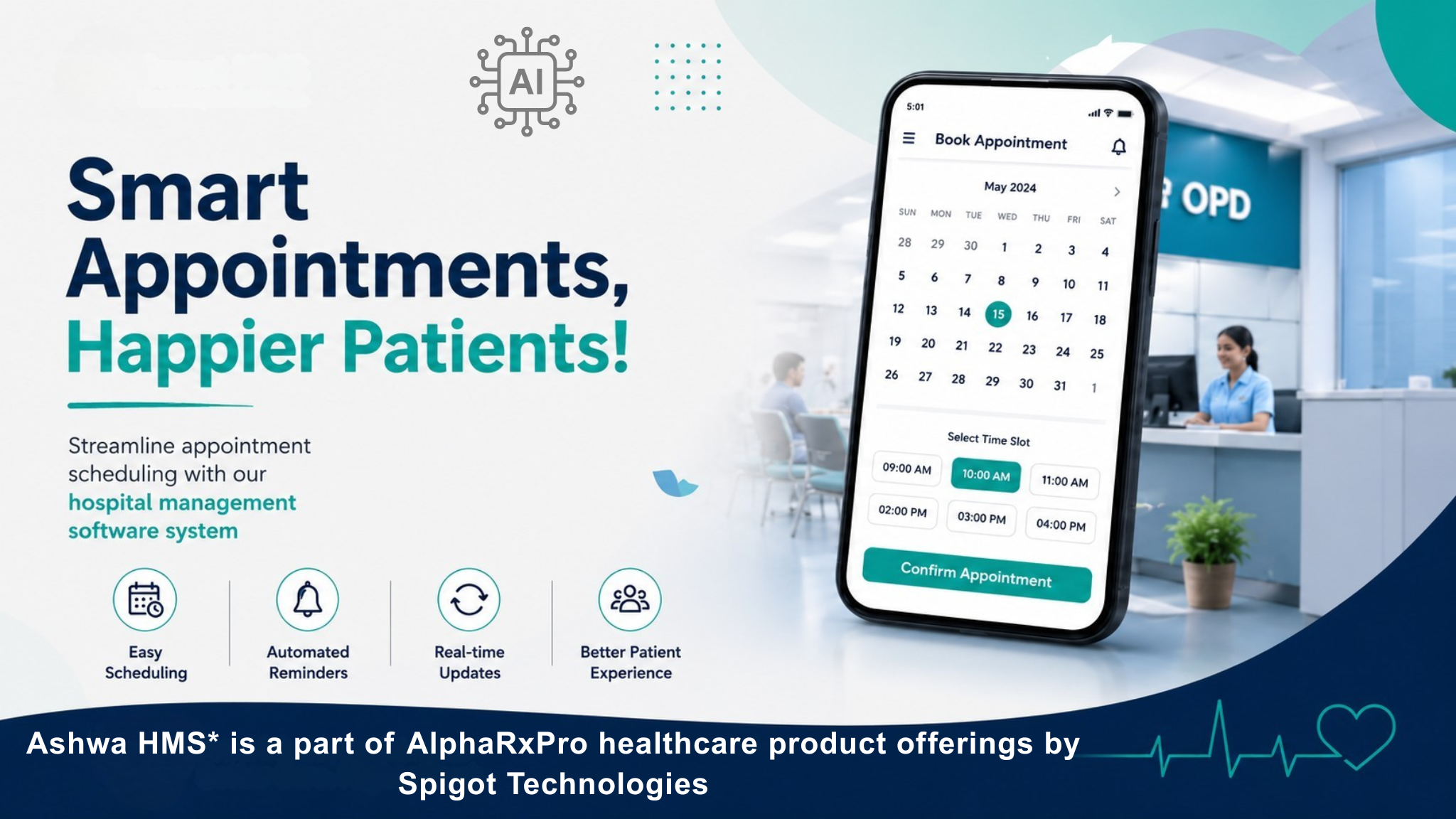
With AI driven technologies taking precedence over regular ones, our AI powered HMS software can work wonders for you, as it can automatically generate discharge summaries based on the available data and patient history. Furthermore, we offer AI based prescription module and support to book, reschedule and cancel appointments. All these can make life easier by eliminating monotony and human errors, while taking your organization on the path of success and financial stability.
.